
HOTLINE
0909648899 028 62578355
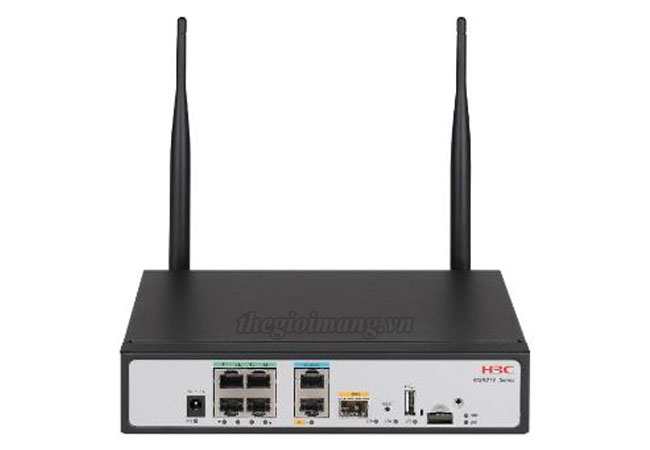
RT-MSR810-LM-EA - H3C MSR810 Enterprise Gigabit Ethernet 4G LTE Router :




Thiết bị định tuyến Router H3C RT-MSR810-LM-EA
| Model | MSR810-LM-EA |
| Hardware specifications | |
| Forwarding Performance In Service (IMIX) | • 200 Mbps |
| CPU | • 800MHz |
| Memory | • 1 GB |
| Flash(default/maximum) | • 256 MB |
| External Flash | • N/A |
| USB ports | • 1 |
| Console ports | • 1 |
| WAN ports | • 1 × GE copper port • 1 × SFP port |
| LAN port | • 4 × GE ports (can be configured as WAN interfaces) |
| WLAN | • N/A |
| WLAN antenna | • N/A |
| Built-in 3G/4G modem | • TDD-LTE: · Band 38: 2570 to 2620 M · Band 40: 2300 to 2400 M · Band 41: 2535 to 2655 M • FDD-LTE: · Band 1: UL: 1920 to 1980 M, DL: 2110 to 2170 M · Band 3: UL: 1710 to 1785 M, DL: 1805 to 1880 M · Band 5: UL: 824 to 849 M, DL: 869 to 894 M · Band 7: UL: 2500 to 2570 M, DL: 2620 to 2690 M · Band 8: UL: 880 to 915 M, DL: 925 to 960 M · Band 20: UL:832~862M, DL:791~821MHz · Band 28: UL: 703 to 748 M, DL: 758 to 803 M • WCDMA/HSPA+: · Band 1: UL: 1920 to 1980 M, DL: 2110 to 2170 M · Band 5: UL: 824 to 849 M, DL: 869 to 894 M · Band 8: UL: 880 to 915 M, DL: 925 to 960 M • GSM: · Band 3: UL: 1710 to 1785 M, DL: 1805 to 1880 M · Band 5: UL: 824 to 849 M, DL: 869 to 894 M · Band 8: UL: 880 to 915 M, DL: 925 to 960 M |
| 3G/4G antenna | • Stick-like/Magnetic antenna |
| SIM card slot | • 2 (dual-card one-standby) |
| Max power consumption | • 12W |
| Power voltage(adapter) | • External power adapter: 100 VAC to 240 VAC @ 50 Hz/60 Hz |
| Power voltage(device) | • DC 12V 2A |
| Dimensions (H × W × D) | • 44 x 210 x 140 mm |
| Operating temperature | • 0~ 45 ℃ |
| Operating humidity | • 5% RH to 95% RH, non-condensing |
| EMC | • FCC Part 15 Subpart B CLASS B • ICES-003 CLASS B • VCCI CLASS B • CISPR 32 CLASS B • EN 55032 CLASS B • AS/NZS CISPR32 CLASS B • CISPR 35 • EN 55035 • EN 61000-3-2 • EN 61000-3-3 • ETSI EN 300 386 • ETSI EN 301 489-1 • ETSI EN 301 489-52 • GB/T 9254.1 |
| Safety | • IEC 60950-1 • AS/NZS 60950-1 • FDA 21 CFRSubchapter J • GB 4943.1 • UL 62368-1 • CAN/CSA C22.2 No 62368-1 • IEC 62368-1 • EN 62368-1 • AS/NZS 62368-1 |
| Software specifications | |
| Layer 2 switching | • Ethernet, Ethernet II, VLAN (port-based VLAN, guest VLAN), 802.3x, 802.1p, 802.1Q, 802.1X, STP (802.1D), RSTP (802.1w), MSTP (802.1s), PPP, PPPoE client, PPPoE server, and DDR |
| IP services | • Unicast/multicast, TCP, UDP, IP option, IP unnumbered, policy-based routing, NetStream, and sFlow |
| IP application | • Ping, Tracert, ICMP, DHCP server, DHCP relay, DHCP client, DNS client, DNS proxy, DDNS, NTP, and SNTP |
| IPv4 routing | • Static routing • Dynamic routing: RIPv1/v2, OSPFv2, BGP, IS-IS • Route iteration • Policy routing • Equal-cost multi-path routing (ECMP) • Multicast routing: IGMPv1/v2/v3, PIM-DM, PIM-SM, MBGP, MSDP |
| IPv6 | • IPv6 ND, IPv6 PMTU, IPv6 FIB, IPv6 ACL, NAT-PT, 6PE, and DS-LITE • IPv6 tunneling: Manual tunneling, automatic tunneling, GRE tunnel, 6to4, ISATAP • Static routing • Dynamic routing: RIPng, OSPFv3, IS-ISv6, BGP4+ • IPv6 multicast: MLDv1/v2, PIM-DM, PIM-SM |
| QoS | • LR, port-based mirroring, Port Trust Mode, and port priority • Committed access rate (CAR) • FIFO, WFQ, CBQ • Generic Traffic Shaping (GTS) • Traffic classification |
| Security | • PPPoE client & server, portal, 802.1X • Local authentication, RBAC, RADIUS, TACACS+ • Basic Firewall Function, ASPF, ACL, filter, connection limit • IKE, IPsec • L2TP, NAT/NAPT, PKI, RSA, SSH v1.5/2.0, URPF, mGRE, GRE • ARP attack prevention • SSL VPN, ADVPN, GDVPN • AES, DES, 3DES,MD5, SHA1 |
| MPLS | • LDP, Static LSP • L3VPN: Inter-AS MPS VPN (Option 1/2/3), MPLS nested VPN, hierarchy of PE (HoPE), dual-homed CE, MCE, and multirole host • L2VPN: Martini, Kompella, CCC PWs and static PWs • MPLS TE, RSVP TE |
| High availability | • VRRP, VRRPv3 • Bandwidth-based load balancing and backup • IP address-based load balancing and backup • NQA collaboration with routing, VRRP or interface backup |
| Management and maintenance | • SNMP v1/v2c/v3, MIB, SYSLOG, RMON • BiMS remote management, booting from USB drive • CLI, file system, and dual image • DHCP, FTP, HTTP, ICMP, UDP public, UDP private, TCP public, TCP private, and SNMP • Console port login, Telnet (VTY) login, SSH login, and FTP login |
RT-MSR810-LM-EA : H3C MSR810-LM-EA Enterprise 6-Port Gigabit Ethernet 4G LTE Router (2GE WAN(1GE+1SFP), 4GE LAN/WAN, TDD/FDD LTE), EMEA & APAC Edition

RT-MSR810-EI - H3C MSR810 Enterprise Gigabit Ethernet Router...
Liên hệ để có giá tốt

RT-MSR830-6EI-GL - H3C MSR830 6-Port Gigabit Router :
Liên hệ để có giá tốt

RT-MSR830-10EI-GL - H3C MSR830 10-Port Gigabit Router :
Liên hệ để có giá tốt