
HOTLINE
0909648899 028 62578355
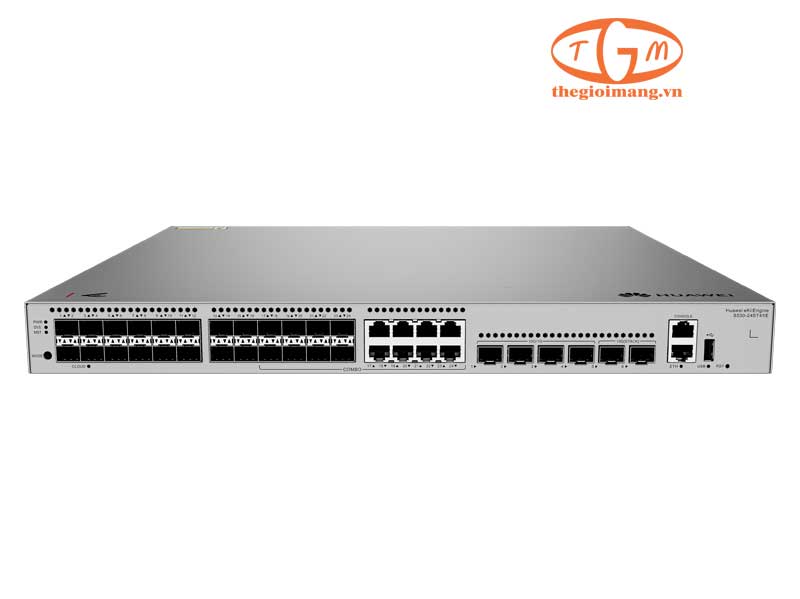

Switch Huawei eKitEngine S530-24ST4XE Layer 3 24x1GE SFP, 8 Combo RJ-45/SFP, 4x10GE SFP+, 2 stack ports




Huawei S530-24ST4XE là dòng Switch thuộc eKitEngine S530 Series được phát triển dựa trên nền tảng phần cứng và phần mềm hiệu suất cao thế hệ tiếp theo. eKitEngine S530 hỗ trợ vận hành đơn giản và linh hoạt, cung cấp các tính năng Layer 3 nâng cao. eKitEngine S530 có thể được sử dụng trong nhiều mô hình khác nhau, như thiết bị chuyển mạch access hoặc aggregation cho các bệnh viện, trường học, nhà máy,...
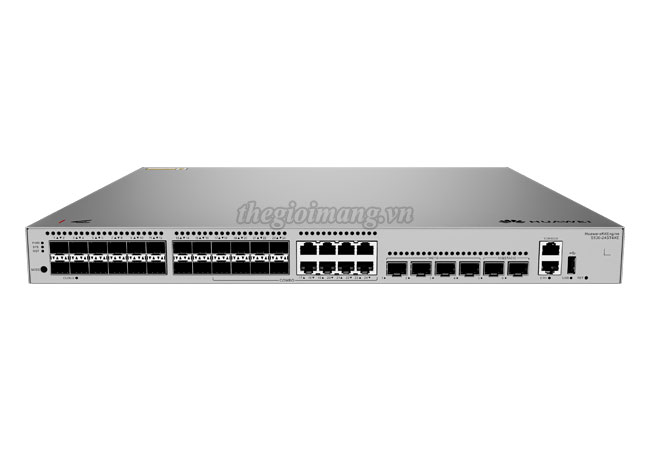
Đặc điểm nổi bật của Huawei eKitEngine S530-24ST4XE
Thông số kỹ thuật
| Model | S530-24ST4XE |
| Switching capacity | • 176Gbps |
| Packet forwarding | • 132Mpps |
| Fixed port | • 24 x GE SFP ports, 8 of which are dual-purpose 10/100/1000 or SFP, 4 x 10 GE SFP+ ports, 2 x 10 GE stack ports |
| MAC address table | • 32K MAC entries (MAX) |
| Chassis dimensions (H x W x D) | • 43.6 mm x 442.0 mm x 420.0 |
| Chassis height | • 1U |
| Weight in full configuration (including packaging materials) |
• 8.0 kg |
| Power module type | • 80 W AC power modules • 1200 W DC power modules |
| Rated input voltage | • AC input: 100 V AC to 240 V AC; 50/60 Hz • High-voltage DC input: 240 V DC • DC input: –48 V DC to –60 V DC |
| Input voltage range | • AC input: 90 V AC to 290 V AC; 45–65 Hz • High-voltage DC input: 190 V DC to 290 V DC • DC input: -38.4 V DC to -72 V DC |
| Maximum power consumption | • 48.70 W (with two 80 W AC power modules) • 85.78 W (with two 180 W AC power modules) |
| Noise | • Sound power at normal temperature: 38.1 dB (A) • Sound pressure at normal temperature: 26.1 dB (A) |
| Long-term operating temperature | • -5°C to +50°C |
| Storage temperature | • –40°C to +70°C |
| Relative humidity | • 5% RH to 95% RH (noncondensing) |
| Power port surge protection | • Differential mode: ±6 kV • Common mode: ±6 kV |
| Heat dissipation mode | • Air cooling, intelligent fan speed adjustment |
| Service Features | |
| MAC address table | • 32K MAC address entries at maximum • Automatic MAC address learning and aging • Static, dynamic, and blackhole MAC address entries • Source MAC address filtering • Limitation on the number of MAC addresses learned by an interface |
| VLAN features | • 4094 VLANs • Voice VLAN • MUX VLAN • Basic QinQ & Selective QinQ |
| Ethernet switching | • Smart Link tree topology and Smart Link multi-instance, providing millisecond-level protection switchover • ERPS (G.8032) • STP (IEEE 802.1d), RSTP (IEEE 802.1w), and MSTP (IEEE 802.1s) • BPDU protection, root protection, and loop protection • LLDP |
| IP routing | • Static route, RIPv1/v2, RIPng, OSPF, OSPFv3, IS-IS, IS-ISv6, BGP, BGP4+, ECMP, VRRP, VRRP6 Routing Policy, Policy-Based Routing |

Switch Huawei eKitEngine S310-24ST4X Layer 3 24x1GE SFP, 8...
Liên hệ để có giá tốt
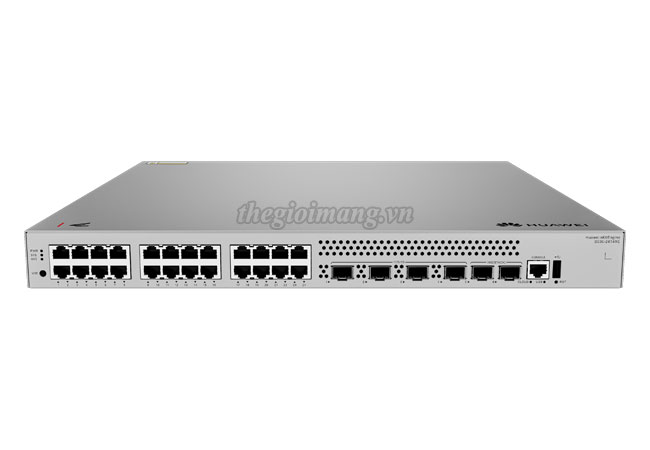
Switch Huawei eKitEngine S530-24T4XE Layer 3 24x1GE, 4x10GE...
Liên hệ để có giá tốt
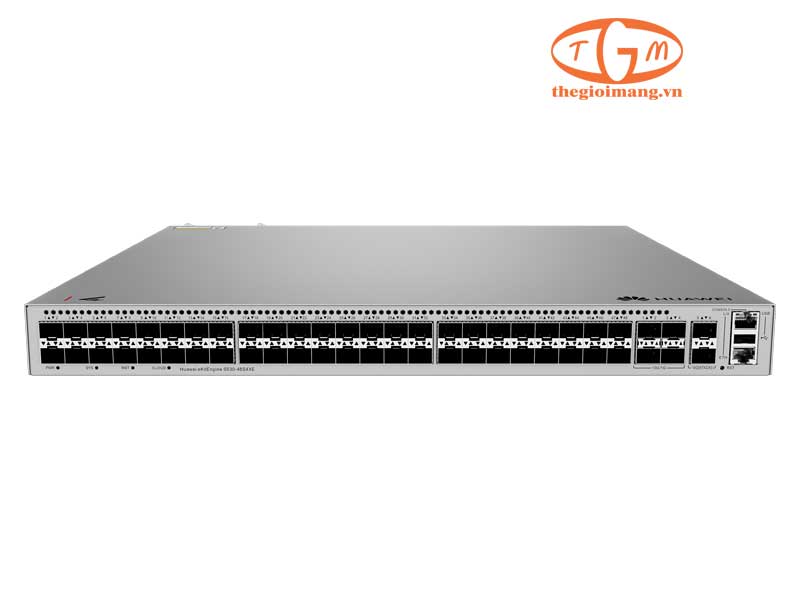
Switch Huawei eKitEngine S530-48S4XE Layer 3 48x1GE SFP, 4x10GE...
Liên hệ để có giá tốt